
1
We find what stopped moving.
Get the motion back, then keep it. Skilled hands-on joint and soft tissue work you can feel before you leave the room, then the loading that makes it hold.
What It Is
Turn your head all the way. Reach the top shelf. Bend without bracing first. That is what manual therapy is for, and most people feel the difference in the same visit.
Because when a joint stops moving the way it should, everything around it compensates. Muscles guard. Motion gets borrowed from the next joint up. The area stays sore long after the original injury settled.
So we work the exact restriction your movement evaluation flagged, with graded pressure, guided motion, and nerve mobility work when the nerve is part of the story. Then loading and movement retraining in the same visit, one-on-one with a licensed physical therapist, so your body keeps the range it just got.
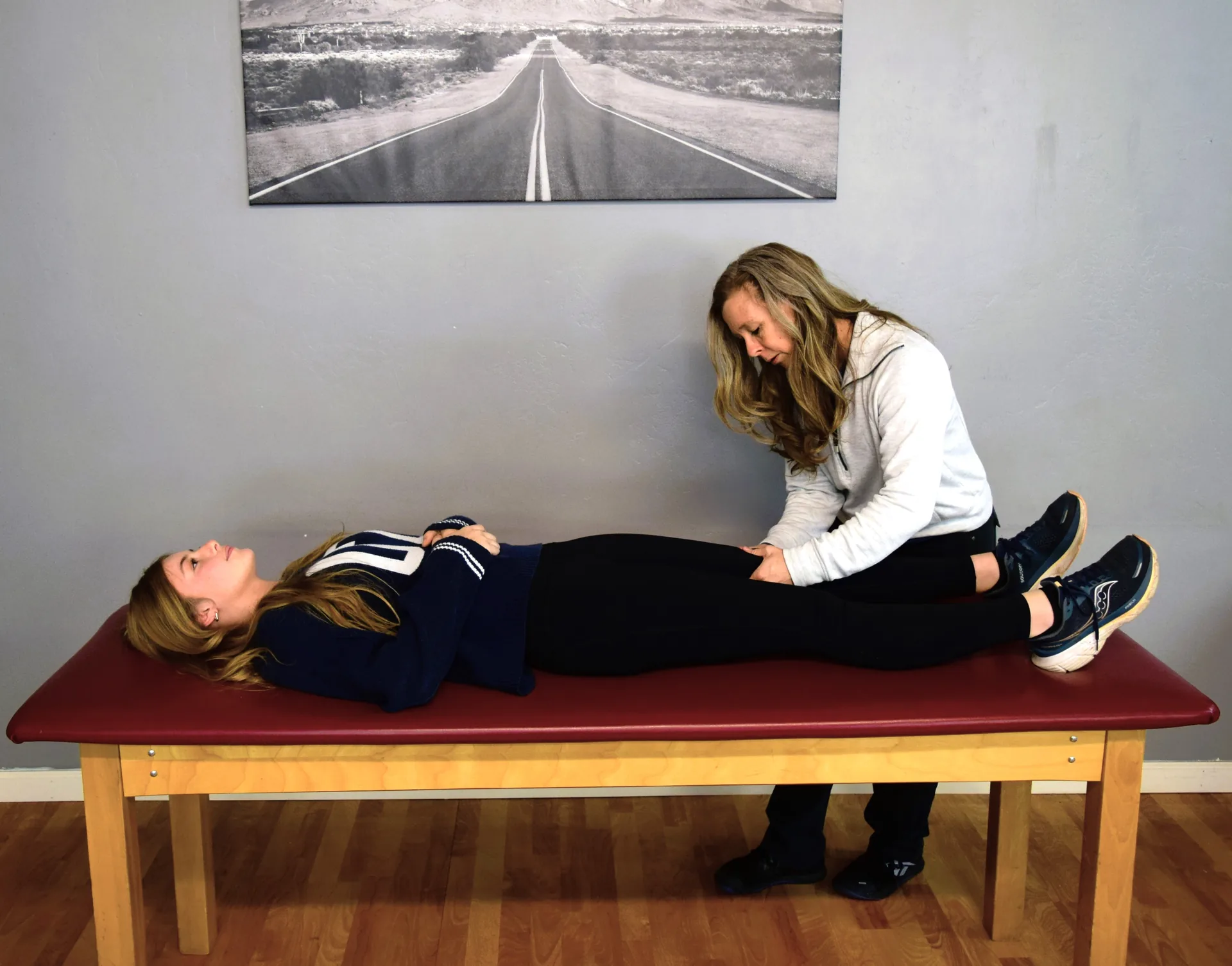 Explained first, always optional
What It Helps
If an area feels locked no matter how much you stretch it, restricted motion is usually the reason. You have been working around it for months, because other people needed you more. Here is the cost of that: every week you wait, your body gets better at avoiding that joint. Point to what sounds like you.
What A Session Looks Like
1
We find what stopped moving.
2
Hands on that exact spot.
3
We load it so it holds.
Why It Works
Motion stretching alone cannot restore.
Relief you can feel the same visit.
Technique our clinicians train on monthly.
One step inside a plan with an endpoint.
Pairs Well With
Questions, Answered
Most people feel firm pressure and a stretch near the end of the range, then relief as the area lets go. It is brief and it is localized. You stay in control the whole time: we work inside a range you can tolerate, we tell you what you will feel before we start, and it is always optional.
No. A massage works broadly across soft tissue to help you relax. Manual therapy is targeted and clinical: a licensed physical therapist works the specific joint or tissue restriction found in your movement evaluation, then retrains the motion in the same visit. Our clinicians also meet monthly for education classes on joint mobilization and neurodynamics, so the hands doing the work keep getting better at it.
In Arizona you do not need a physician referral to start physical therapy. The exception: Medicare, Medicaid, and a few other plans do require one. Not sure which you carry? Call us at (928) 440-3106 and we will sort it out with you before your first visit.
Book Your Visit
Request a time and a real person calls you back. No phone tree. No ‘someone will reach out.’ Just a plan.
5.0 · 250 Google reviews
A real person calls you back
Step 1 of 5
That’s the hard part done. We’ll call during business hours to lock in your time.
Visit Us